
Quick answer: The biggest pros of custom built homes are a layout designed around the way you live, your choice of land, modern building standards, low maintenance in the early years and Tarion warranty coverage when you work with a registered builder. The biggest cons are a higher upfront cost, a longer timeline and a lot more decisions along the way. If you have the time, the budget and a clear picture of what you want, building usually makes sense. If you need to move soon or want a fixed price today, buying is often the better fit.
Key Takeaways
- A custom home is designed around your lot, your family and your routines, so you aren’t living with someone else’s choices.
- New homes are built to the current Ontario Building Code and come with Tarion warranty coverage for up to seven years.
- Building costs more upfront and takes longer than buying, often a year or more from the first meeting to move-in day.
- Around Kingston and the Thousand Islands, your lot (city, rural, waterfront or island) shapes both the cost and the timeline.
Build or Buy? Let’s Talk It Through
Most people who reach out to us about building a home are weighing the same question: should we build, or should we buy something that’s already standing? It’s a good question to sit with, because there’s no single right answer. It depends on your budget, your timeline, where you want to live and how involved you want to be.
My dad and I started Reno Kings, now King Homes, back in 2017, and building has been part of our family for three generations. We’ve built homes all over Kingston and the Thousand Islands, from Gananoque to Wolfe Island and Howe Island, and we’ve also seen plenty of families decide that going custom was the right move for them. So here’s a straight look at the pros and cons of custom built homes, to help you figure out which path fits.
What Counts as a Custom Built Home?
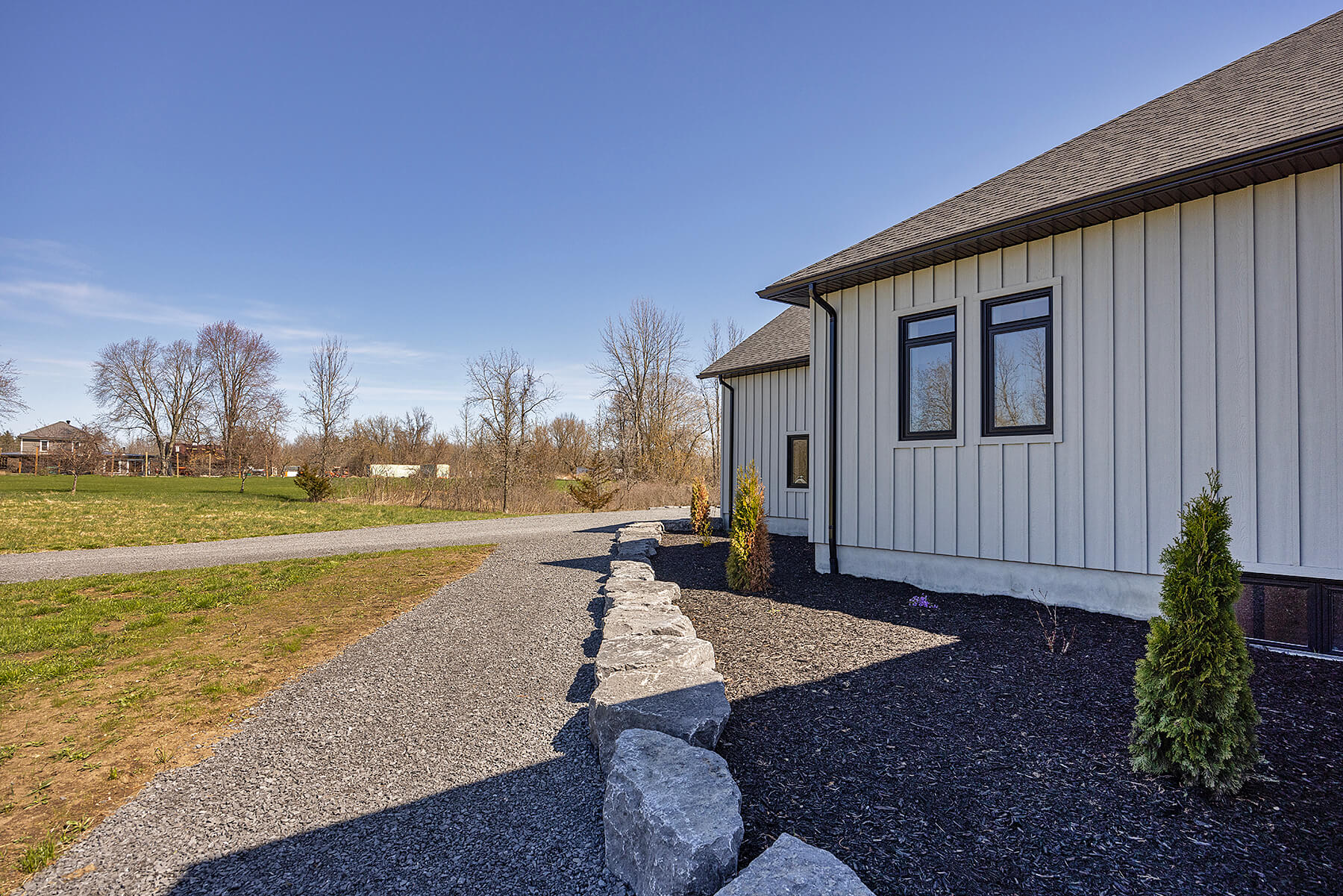
A custom built home is designed for one family and one piece of land. You work with a builder, and often a designer or architect, to plan the layout, the materials and the finishes from the ground up. That’s different from a production home, where a builder offers a set of floor plans in a subdivision and you choose from a list of upgrades. It’s also different from a resale home, where everything from the layout to the windows was chosen by someone else.
Most of our clients already own their land, often a rural lot or a waterfront property they’ve had their eye on for years. Others come to us while they’re still looking. Either way, every custom home build starts with the lot, because the land shapes everything that follows.
The Pros of Custom Built Homes
A home designed around the way you live
This is the big one. When you build, you decide where the kitchen goes, how many bedrooms you need, whether the laundry sits on the main floor and which window frames your view of the water. You aren’t paying for someone else’s renovations, or planning your own the day you move in. For families who plan to stay put for a long time, that fit is worth a lot.
You choose the land
Building lets you put your home on the property you love, whether that’s a lot in the city, a few acres north of the 401 or a waterfront spot in the Thousand Islands. Homes in those places don’t come up for sale very often, and when they do, they rarely match what you’re looking for. Building on your own lot solves that problem.
Built to today’s standards
A new home is built to the current Ontario Building Code, with modern insulation, windows, wiring and mechanical systems. That usually means a more comfortable home and lower energy bills than you’d get in an older house. If you want to go further, insulated concrete forms (ICF) add warmth and quiet, which pays off through our long Eastern Ontario winters.
Less maintenance in the early years
Everything in a new home is new: the roof, the furnace, the windows and the plumbing. You shouldn’t be budgeting for a new roof or replacing a tired furnace in your first years, which is a big difference from many resale homes.
Warranty protection
When you build with a licensed, Tarion registered builder, your home is enrolled with a new home warranty. That gives you coverage for workmanship and materials in the first year, major systems like plumbing, electrical and heating in the second year, and major structural defects for up to seven years. Most resale homes don’t come with anything like that.
You know how it was built
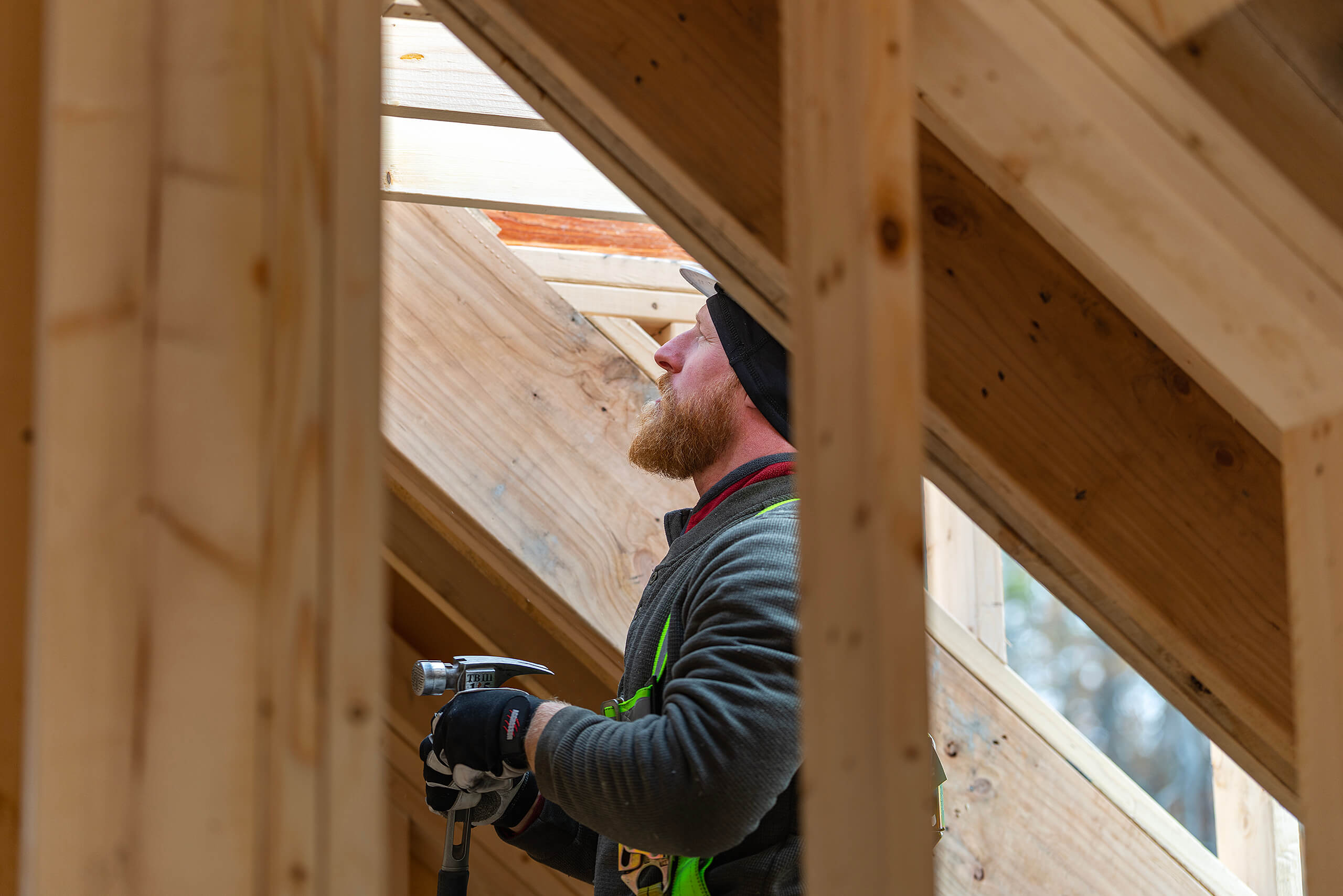
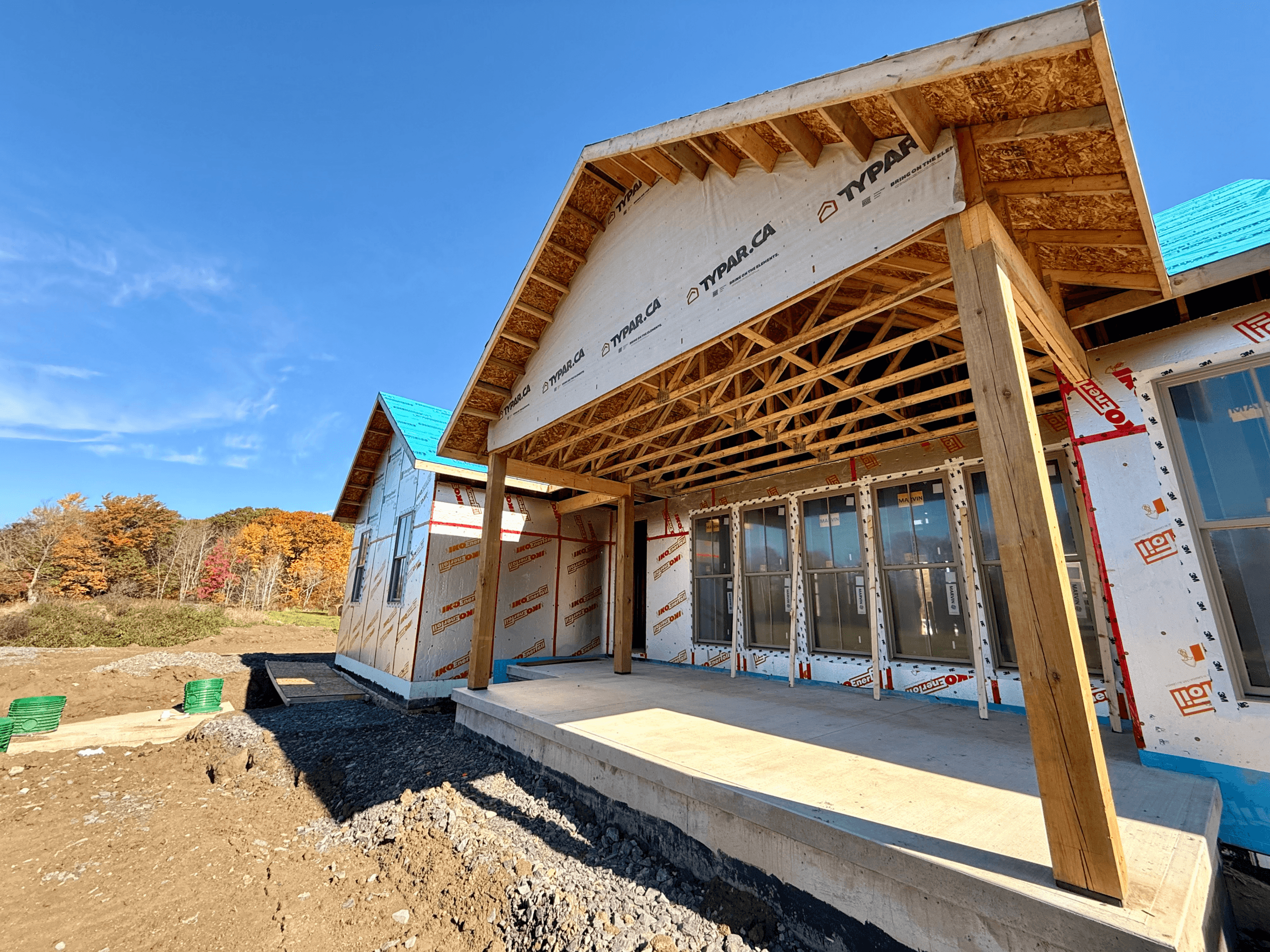
With a resale home, you’re relying on a home inspection to tell you what’s behind the walls. With a custom build, you can watch the footings get poured, the framing go up and the insulation go in. A good builder will walk you through each stage and answer your questions along the way.
Thinking about building on a lot you already own? Tell us about your property and we’ll give you a straight answer on what it would take.
The Cons of Custom Built Homes
A higher upfront cost
Building usually costs more upfront than buying a comparable resale home. Around Kingston, most custom homes run about $400 to $600 per square foot to build, before land, and more for high-end designs.
When you compare the cost to build a new home with a listing down the street, make sure you’re comparing the whole picture. Count the renovations the older house would need, the age of its roof and furnace, and what it would cost to heat.
It takes longer
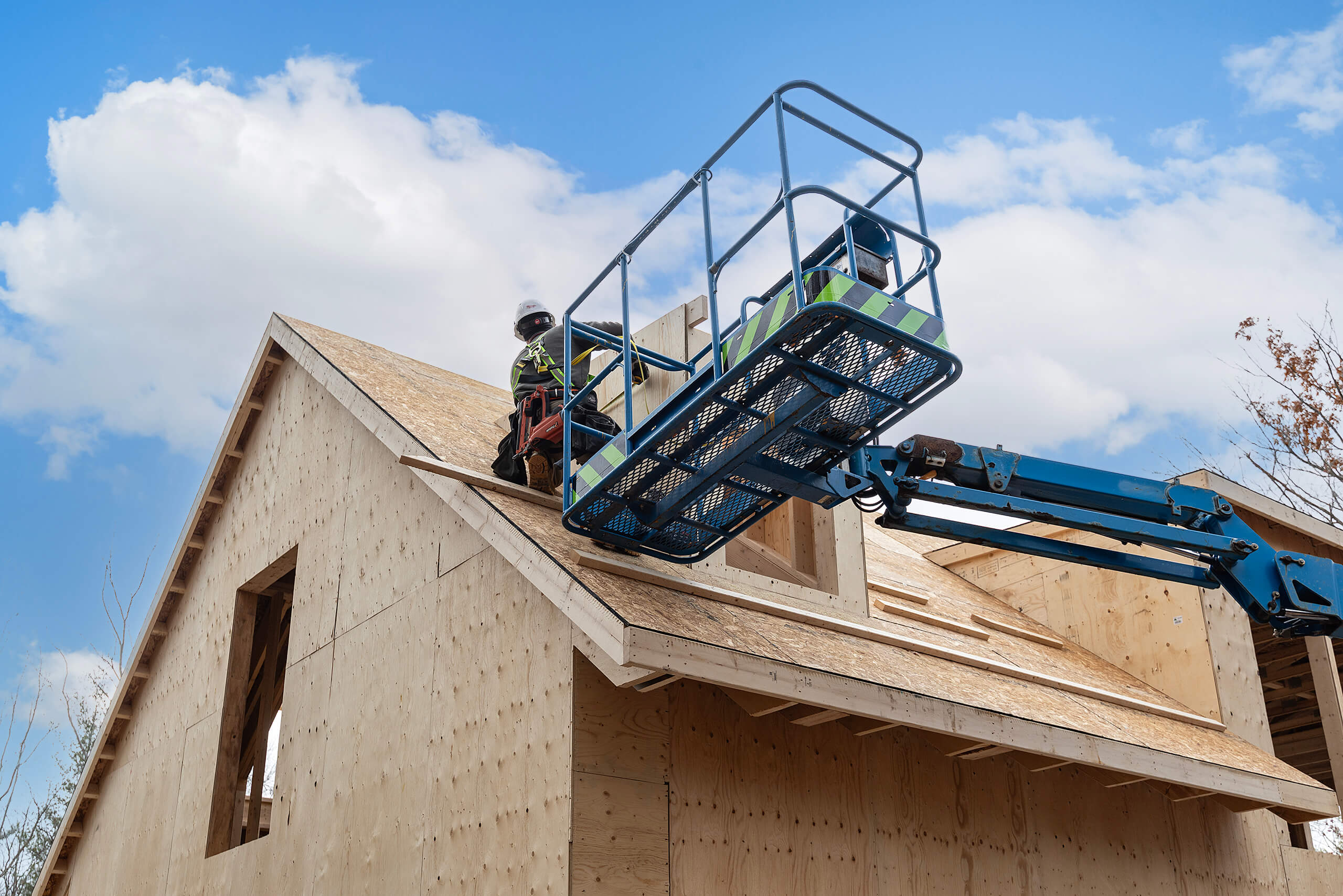
Buying a home can take a few weeks from offer to keys. Building takes much longer. Design, budgeting and permits can take several months before construction even starts, and the build itself typically runs seven months to a year or more, depending on size, complexity and weather. If you need to move by a certain date, that timeline matters.
A lot of decisions
From the floor plan to the faucets, you’ll make hundreds of choices. Some people love that part. Others find it tiring. A good builder helps by giving you clear options and a schedule for decisions, so you’re not picking tile at the last minute.
Financing works differently
Most people who build a home use a construction mortgage, which pays out in stages, called draws, as each phase of the build is finished. Lenders usually send an inspector before each draw, and some charge fees for appraisals and inspections. It’s not complicated once you understand it, though it’s worth talking to your lender early. Ratehub has a good overview of how construction mortgages work.
Rural and island lots add steps
Building on Wolfe Island, Howe Island or a rural lot near Gananoque means planning for things a city lot doesn’t need: a well, a septic system, ferry or barge deliveries and sometimes rock removal. None of these are deal-breakers. They do add cost and time, so it’s best to know about them before you commit to a design.
Resale value isn’t guaranteed
A custom home is built for you, and some very personal choices may not appeal to every future buyer. If you think you might sell within a few years, keep the layout and finishes broadly appealing, and be careful not to build far above the value of the homes around you.
The Pros and Cons of Buying an Existing Home
Buying has real advantages too. You can usually move in within weeks, you know the price before you commit and you can see exactly what you’re getting. In established neighbourhoods, you also get mature trees, finished landscaping and a community that’s already in place.
The trade-offs are the flip side of building. You’re limited to what’s on the market, older homes often need updates sooner, and the changes needed to make a house fit your family can add up quickly. If you love the location but not the house, a renovation or addition can be a good middle ground. Our team does plenty of renovations and additions as well, so we’re happy to talk through both options.
Still looking for the right home or the right lot to build on? We often work with Alyce Polito, a RE/MAX Finest Realty agent who knows Kingston, Gananoque and the surrounding area well. She can help you find a home that fits, or a piece of land that’s ready for a custom build.
Building vs. Buying at a Glance
Here’s a quick side-by-side to help you compare:
| Custom built home | Buying an existing home | |
| Upfront cost | Higher, about $400 to $600 per sq ft before land | Usually lower |
| Timeline | Often a year or more, including design and permits | A few weeks to a few months |
| Design | Built around your family and your lot | Limited to what’s for sale |
| Location | Your choice of lot, including rural and waterfront | Limited to current listings |
| Maintenance | Low in the early years | Depends on the age of the home |
| Warranty | Tarion coverage for up to seven years | Usually none |
| Energy efficiency | Built to the current building code | Varies by age and updates |
How to Decide What’s Right for You
A few questions can help you sort it out:
- How long do you plan to stay? The longer you’ll live there, the more a custom home’s fit and lower maintenance pay off.
- How soon do you need to move? If it’s within a few months, buying is usually the realistic choice.
- Do you already own land? Owning your lot removes one of the biggest hurdles to building.
- Can you find what you want on the market? If you’ve been searching for a year and nothing fits, building may be the better route.
- What does your full budget look like? Include land, construction, fees, landscaping, furnishings and a cushion of 10 to 15 percent for changes.
- How involved do you want to be? Building takes time and decisions. The right builder keeps it manageable.
What Building With Us Looks Like
Every complete custom build we take on starts with a walk of your property and a detailed, honest budget. We’d much rather tell you up front what your lot will need than surprise you halfway through. From there, our own crew handles the build, and we keep you updated at every stage so you always know where things stand.
King Homes, formerly Reno Kings, is HCRA licensed and Tarion registered, and we’ve been building in the Kingston area since 2017. You can see finished homes in our portfolio, take a closer look at our Country Home project spotlight, or read what past clients have to say on our testimonials page.
Frequently Asked Questions
What are the main pros and cons of custom built homes?
The main pros are a layout designed around your needs, your choice of land, modern building standards, lower maintenance and Tarion warranty coverage. The main cons are a higher upfront cost, a longer timeline, more decisions and construction financing that pays out in stages.
Is it cheaper to build or buy a home near Kingston?
Buying is usually cheaper upfront. Most custom homes around Kingston cost about $400 to $600 per square foot to build, not including land. Building can close some of that gap over time through lower maintenance, lower energy bills and renovations you won’t need.
How long does a custom home build take?
Plan for several months of design, budgeting and permits, then typically seven months to a year or more of construction, depending on the size of the home, your lot and the weather.
Can I build a custom home on Wolfe Island or Howe Island?
Yes. Island builds need extra planning for ferry or barge deliveries, a private well and a septic system, which can add cost and time. We build on the islands and throughout the Thousand Islands area, including Gananoque.
Do custom built homes hold their value?
A well-built home in a good location tends to hold its value. Very personal design choices may not appeal to every buyer, so if you might sell in the next few years, balance what you love with broad appeal.
Let’s Talk About Your Home
Whether you’re leaning toward building or still weighing the pros and cons of custom built homes, we’re happy to talk it through. Tell us about your lot, your timeline and your budget, and we’ll give you a straight answer on what building would look like for you. No pressure, just real answers.
Request a free quote or give us a call at 613-583-8629.